Dry Needling
Dry needling is a focused treatment we use to help manage muscle pain, tight “knots,” and movement problems that slow your recovery.
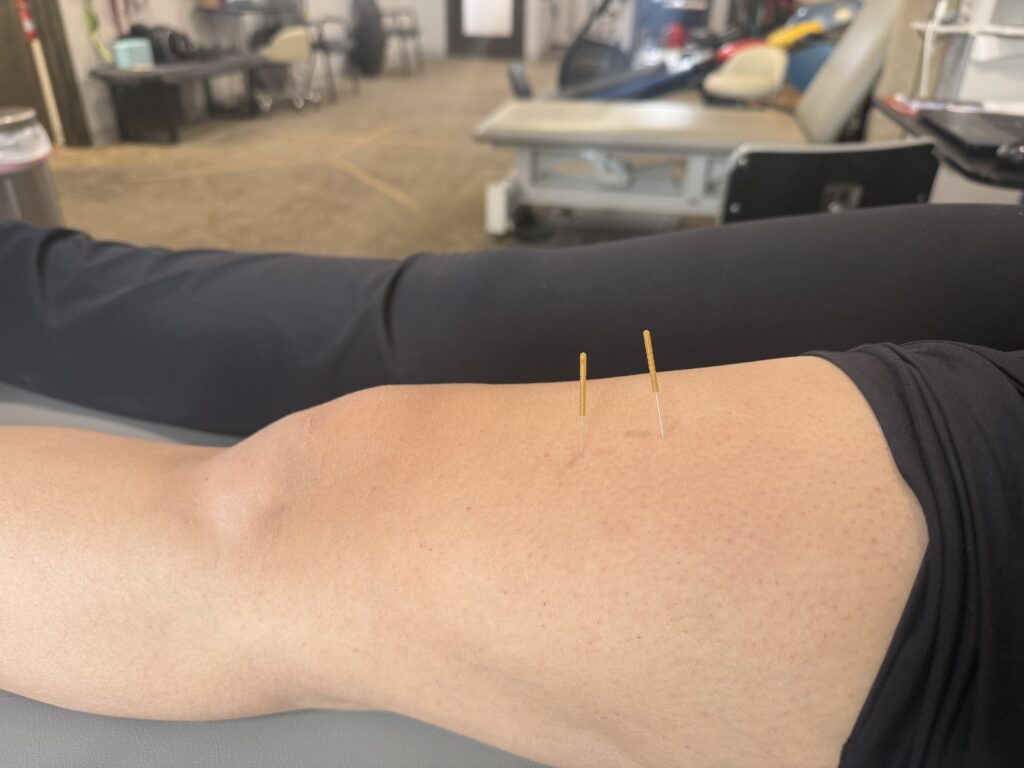
Dry needling uses very thin, solid needles to target myofascial trigger points, which are tight, tender spots in your muscles that can cause local or referred pain. The needles do not inject any medicine; this is why the technique is called “dry.”
When a therapist inserts a needle into a trigger point, the muscle may twitch or ache for a moment, then release. This can reduce muscle tightness, improve local blood flow, and ease both local and referred pain. For many people, that change also makes it easier to move the joint, load the area, and get more out of their exercises.
Because dry needling uses needles and can cause brief soreness or small bruises, we always review your medical history, medications, and comfort with needles first.
We explain expected sensations, potential side effects, and alternatives, then decide together whether this treatment is a good fit for you before we start.
- Release deep muscle “knots” that keep coming back
- Ease stubborn foot, ankle, leg, hip, and back pain
- Improve comfort and ease of movement in daily life
- Insurance Accepted
- Self-Pay plans available
- No Referrals Required
Why Try Dry Needling?
Dry needling targets deep, stubborn muscle “knots” that you cannot reach with stretching, massage, or foam rolling.
At Revitalize Physical Therapy, we use dry needling when muscle tension is clearly driving your symptoms.
The thin needles go straight into overactive trigger points, which can cause a brief twitch or deep ache followed by a release in the muscle. Many people notice that a tight area feels softer, less “bunched up,” and easier to move afterward.
Dry needling is especially useful if you:
- Have pain that always seems to come from the same tight spot in a muscle.
- Feel deep, pinpoint tenderness that flares when you press on it.
- Get recurring foot, ankle, calf, hip, or back pain that keeps coming back despite stretching.
- Notice that certain muscles tire quickly, cramp, or grab with everyday tasks or sport.
Is Dry Needling Right for Me?
Dry needling is best suited to people whose pain clearly has a strong muscle or “trigger point” component.
It is likely to help if you:
- Feel a very specific, tender “knot” in a muscle that sends pain when pressed.
- Have deep, aching pain in your calves, thighs, hips, back, or around the shoulder blade.
- Get pain that follows a familiar pattern (for example, calf tightness that always sends pain into the heel or arch).
- Notice muscles that grab, cramp, or fatigue quickly during simple tasks or sport.
- Have tried stretching, massage, and basic strength work but still feel the same tight spot flaring up.
We may hold off, modify, or avoid dry needling if you:
- Take blood thinners or have a bleeding or clotting disorder.
- Have a strong fear of needles or have fainted with injections or blood tests.
- Are pregnant, have uncontrolled medical conditions, or have had recent surgery in the area.
- Have infection, open wounds, or active skin disease over the region to be treated.
What Is Dry Needling Like?
A dry needling session feels different from massage or cupping because the treatment goes straight into the muscle. Most people describe a quick sting as the needle goes in, followed by a deep, dull ache or a brief “jump” in the muscle, then a feeling of release.
The needle may stay in place for a short period or be gently moved or “pistoned” within the muscle to get a full release.
You may feel a sharp pinch that fades quickly. The muscle may twitch or jump once or twice; this is a normal response and often a sign that the trigger point has been reached.
Sensations can include a deep ache, heaviness, or a spreading, dull discomfort that usually settles within seconds. If anything feels too intense, you can say so and the therapist will adjust or stop.
Each point is treated for a short time, and several points may be addressed in one visit, depending on your tolerance and the size of the area.
Afterwards, the treated area often feels tired or “worked,” like you have done a focused workout for that muscle. Mild soreness for 24–48 hours is common. You should still be able to walk, work, and do normal daily activities.
If you ever notice strong swelling, increasing redness, or feel unwell after treatment, you should contact us.
Results & Benefits of Dry Needling
Dry needling is aimed at one main thing: switching off overactive trigger points so your muscles can work the way they are meant to.
Many people feel a clear change in the treated area soon after a session. A spot that felt like a hard knot or deep, nagging ache often feels softer and less “grabby.”
Movements that used to catch, like pushing off through the calf, walking up stairs, or straightening your back after sitting, can feel smoother and less threatening.
Pain is a major focus. By targeting trigger points that keep sending pain signals, dry needling can reduce local and referred pain in areas such as the calves, Achilles, plantar fascia, thighs, hips, and lower back.
When that constant ache eases, even a little, it often becomes easier to stay active, sleep more comfortably, and get through a full day on your feet.
Common Questions about Dry Needling
Most people feel a quick sting as the needle goes in, followed by a deep, dull ache or brief twitch in the muscle. This usually settles within seconds. The area can feel sore, like a focused workout, for 24–48 hours. If anything feels sharp, burning, or too intense, we stop or change what we are doing.
Some people notice a change in pain or tightness straight away, especially in very trigger-point driven pain. Others feel more benefit over the next day or two as the post-treatment soreness eases.
Dry needling is generally safe when done by a trained therapist using clean, single-use needles and good technique. It is not suitable for everyone, though. We are cautious or avoid it if you take blood thinners, have a bleeding or clotting problem, are pregnant, have uncontrolled medical issues, or have infection or open wounds in the area. Your therapist will screen you first and explain your options.
Common side effects include short-lived soreness, a small bruise, or a drop of blood at the needle site. Serious problems are rare but can include infection or, in high-risk areas like the chest, lung irritation if needles are placed too deep. This is why we use strict hygiene, careful depth control, and avoid certain regions when they are not necessary.
Dry needling and acupuncture both use thin needles, but they are based on different ideas. Dry needling is built around modern anatomy and targets trigger points in muscles to change pain and movement. Acupuncture comes from traditional Chinese medicine and uses mapped points along meridians for a broader effect on the body. At Revitalize Physical Therapy, we use dry needling to treat specific muscle and joint problems linked to how you move.
Keep the area gently moving, drink water, and avoid unusually heavy or new exercise using the treated muscle until the soreness eases. Normal walking and day-to-day tasks are fine as long as they feel comfortable. If you notice increasing redness, swelling, heat, or feel unwell after treatment, contact us or your doctor for advice.
What our clients Are Saying About Us
EXCELLENTTrustindex verifies that the original source of the review is Google. Very professionalPosted onTrustindex verifies that the original source of the review is Google. Robin is quite personable, helped alleviate my muscle pain and was familiar with my normal exercise routine. Thanks so much!Posted onTrustindex verifies that the original source of the review is Google. Beth, Is a wonderful therapist she explains everything that she was doing and why she’s doing it. Introduce a lot of new exercises and got me to were I wanted to be. I would work with her all the time!Posted onTrustindex verifies that the original source of the review is Google. 6th theory appointment after bunion surgery went very well. Beth is very knowledgeable and explained everything. Took the extra time to tape my foot to reduce future swellingPosted onTrustindex verifies that the original source of the review is Google. Beth is awesome! Very thorough and explains things in layman’s terms. Excited for my next visit!Posted onTrustindex verifies that the original source of the review is Google. I feel welcomed and cared for at this facility. The therapists gives a lot of professional attention, explain or model your exercises and treatment, and are very encouraging.Posted onTrustindex verifies that the original source of the review is Google. Beth was fantastic in explaining my Sciatica Condition and beginning my treatment. Highly recommend!Verified by TrustindexTrustindex verified badge is the Universal Symbol of Trust. Only the greatest companies can get the verified badge who has a review score above 4.5, based on customer reviews over the past 12 months. Read more

Break free of Muscle knots!
-
Insurance Accepted
Check if we are in network -
No insurance?
Self-Pay plans are available -
Direct access to Physical therapy
No Referrals Required