Cupping Therapy
Cupping therapy is a hands-on treatment we use to help manage pain, muscle tightness, and recovery.
Cupping uses specialized cups and controlled suction to gently lift the skin and underlying tissues. This suction increases local blood flow and fluid movement in the treated area and may help ease muscle tension and pain.
Our therapists apply cupping in a controlled clinical setting with clear goals: reduce pain, improve soft-tissue mobility, and make it easier for you to move, load, and strengthen the affected area.
Because cupping can cause temporary circular marks and carries a small risk of skin irritation, we review your medical history, explain expected effects, and decide together whether this treatment fits you before starting treatment.
- Move more freely with less muscle tightness
- Ease stubborn foot, ankle, and leg pain
- Get drug-free pain relief as part of expert-guided care
- Insurance Accepted
- Self-Pay plans available
- No Referrals Required
Why Get Cupping Therapy?
Cupping therapy can help tight, sore muscles relax so you can move better, hurt less, and recover more comfortably.
At Revitalize Physical Therapy, we use cupping as a focused way to calm stressed tissue in areas such as the neck, shoulders, upper back, low back, hips, arms, and legs.
The suction from the cups may help reduce muscle tension and soreness, which can make it easier to reach, lift, turn, walk, stand, and train without constant pulling, tightness, or irritation.
Cupping therapy can be especially useful if you:
- Feel stiff or tight through the body despite stretching or massage.
- Get recurring pain across the body that slows you down.
- Sit or stand for long periods resulting in sore neck, back, shoulders, or legs.
- Want a drug-free option to help manage muscle and soft-tissue pain.
- Need your muscles to recover between runs, workouts, or matches.
Is Cupping Therapy Right for Me?
In your first session at Revitalize Physical Therapy, our qualified therapists will check your medical history, explore your symptoms, and then advise whether cupping is the right choice for you.
Cupping therapy may help if you:
- Have ongoing tightness in the neck, shoulders, upper back, low back, hips, calves, or feet that keeps coming back.
- Feel knots, pulling, or burning tension in the shoulders, back, forearms, or legs that does not fully ease with stretching.
- Have muscle soreness or soft-tissue pain that flares with work, training, lifting, typing, running, or overhead activity.
- Are managing a long-term problem such as neck tension, shoulder tightness, tennis elbow, plantar fasciitis, or Achilles pain and want extra support alongside rehab.
- Prefer to include hands-on, low-drug pain relief as part of your treatment plan rather than relying only on medication.
We may hold off or avoid cupping if you:
- Take blood thinners or have a bleeding or clotting problem.
- Have very fragile skin, active rashes, wounds, or infection in the area.
- Are pregnant, have a serious medical condition, or have a history that makes bruising risky.
What Is Cupping Therapy Like?
A cupping session feels like strong, steady pressure and pulling on the skin and muscles, not sharp or stabbing pain. Most people describe it as “intense but okay,” followed by a feeling of release or lightness in the area.
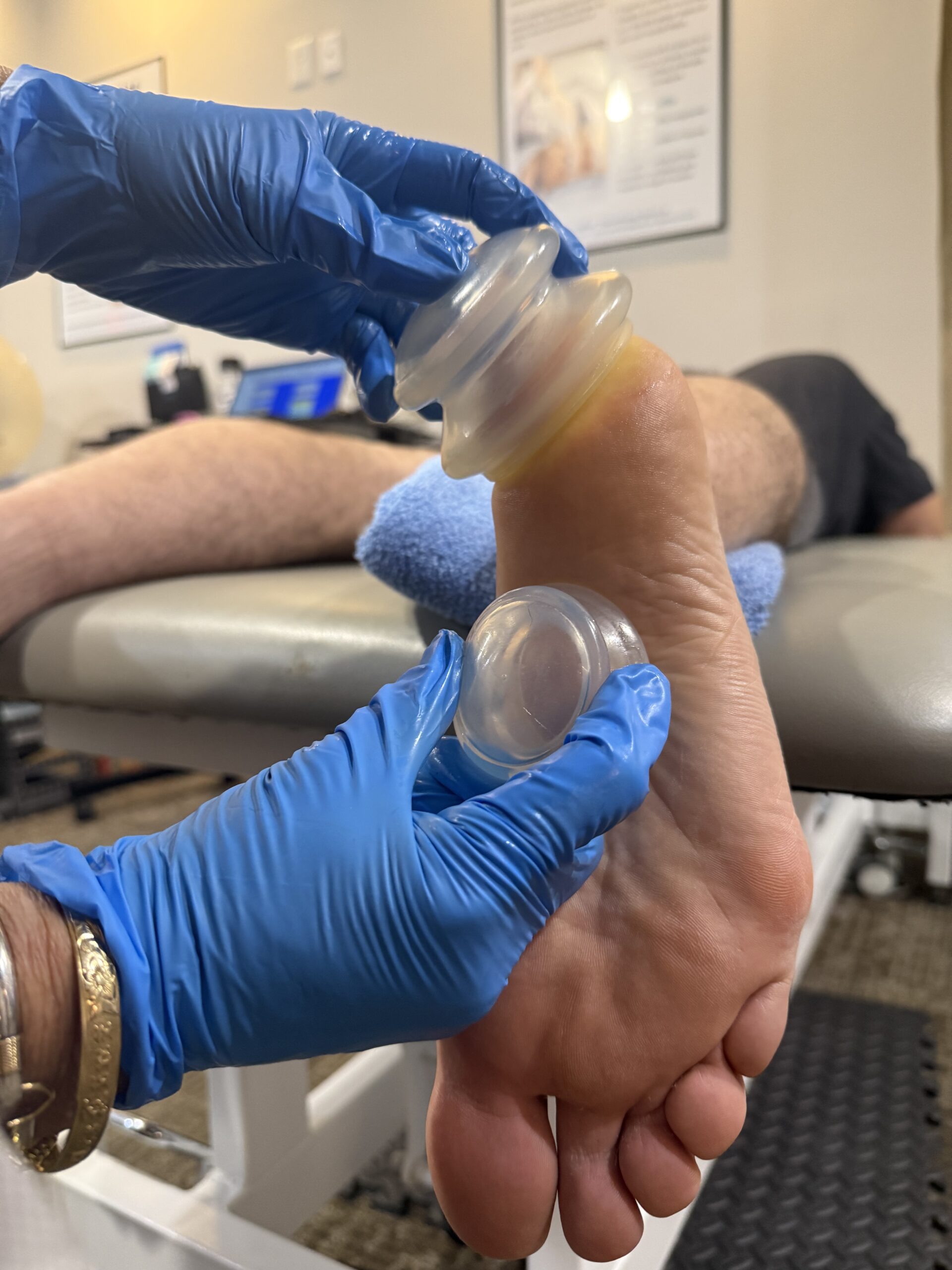
You stay dressed in loose clothing, and we only uncover the area we are treating, such as your calves, hamstrings, lower back, or the underside of your foot.
The therapist then places smooth cups on the skin and uses a small pump to create suction.
You’ll feel the tissue gently lift into the cup and a deep, constant pressure that we can increase or decrease based on how you feel. If anything feels too strong, we adjust or remove the cup right away.
The cups may stay still, or the therapist may glide them slowly along the muscle with a small amount of lotion. You remain in one position, relaxed, while we work.
After a session, the area may feel like it has had a deep massage for a day or two, but you should still be able to walk and carry on with normal daily activities. We will tell you what to avoid that day, such as heavy workouts or hot tubs on freshly cupped skin.
Results & Benefits of Cupping Therapy
Many patients feel looser and lighter in the treated area after a session.
A tight neck, stiff shoulders, sore upper back, tense forearm, or overloaded calf may move more freely, which can make everyday activity and exercise feel more comfortable.
It may help take the edge off stubborn muscle and soft-tissue pain in the neck, shoulders, back, arms, hips, and legs.
For active people, cupping can also support recovery.
If you lift weights, run, play sport, work at a desk, or do physical work, it may help reduce that heavy, loaded feeling in overworked muscles between sessions.
Common Questions about Cupping Therapy
You feel strong pressure and pulling under the cups, but you should not feel sharp or burning pain. Most people describe it as “tight but okay,” followed by a sense of release. If anything feels too strong, your therapist reduces or removes the cups straight away.
Not everyone will have lasting marks. However, round red or purple circles can be expected and usually fade over a few days. In some people, they can last up to about two weeks, depending on skin type and suction strength. They should not be very painful. If they feel hot, very sore, or start to spread, you should let us know.
Many people feel looser or lighter in the treated area right after a session. Pain changes vary: some feel an immediate drop, others notice improvement over the next day or two as the soreness from the treatment settles. We track your response over several visits to see if cupping is truly helping you.
No. Cupping is generally low risk in healthy adults, but it is not suitable if you have bleeding problems, take blood thinners, have very fragile or damaged skin, or have certain medical conditions. Your therapist checks your history first and will tell you if cupping is not a good idea in your case
Cupping should not replace exercise, strength work, or medical care. At Revitalize Physical Therapy, we may use cupping as one piece of a wider plan that includes targeted exercises, manual therapy, and gait or balance training.
You can usually carry on with normal daily activities. We ask you to stay hydrated, keep the area clean and dry, and avoid very hot baths, saunas, or intense new workouts over the heavily cupped area that day. If you notice blistering, spreading redness, or feel unwell, you should contact us.
What our clients Are Saying About Us
EXCELLENTTrustindex verifies that the original source of the review is Google. Very professionalPosted onTrustindex verifies that the original source of the review is Google. Robin is quite personable, helped alleviate my muscle pain and was familiar with my normal exercise routine. Thanks so much!Posted onTrustindex verifies that the original source of the review is Google. Beth, Is a wonderful therapist she explains everything that she was doing and why she’s doing it. Introduce a lot of new exercises and got me to were I wanted to be. I would work with her all the time!Posted onTrustindex verifies that the original source of the review is Google. 6th theory appointment after bunion surgery went very well. Beth is very knowledgeable and explained everything. Took the extra time to tape my foot to reduce future swellingPosted onTrustindex verifies that the original source of the review is Google. Beth is awesome! Very thorough and explains things in layman’s terms. Excited for my next visit!Posted onTrustindex verifies that the original source of the review is Google. I feel welcomed and cared for at this facility. The therapists gives a lot of professional attention, explain or model your exercises and treatment, and are very encouraging.Posted onTrustindex verifies that the original source of the review is Google. Beth was fantastic in explaining my Sciatica Condition and beginning my treatment. Highly recommend!Verified by TrustindexTrustindex verified badge is the Universal Symbol of Trust. Only the greatest companies can get the verified badge who has a review score above 4.5, based on customer reviews over the past 12 months. Read more

Calm Tight Muscles Fast!
-
Insurance Accepted
Check if we are in network -
No insurance?
Self-Pay plans are available -
Direct access to Physical therapy
No Referrals Required